The Deep Rest Protocol -
Reduce stress and burnout for your teams in 20 minutes
Athens‑based and online sessions with Tara Muir
To help you and your people feel more relaxed, connected and energised at work.
- Short, practical sessions that fit into the workday
- Evidence‑based NSDR (Non‑Sleep Deep Rest) for deep mental recovery
- Practical protocols your teams can use to reset during the workday
- Proven benefits for focus, stress, and sleep quality
- Add simple mindful stretching and breathing techniques
- Available in‑person and online
Contact: tara@warriorheart.yoga
77% of professionals have experienced burnout at their current job.
91% say unmanageable stress or frustration directly impacts the quality of their work
Burnout and disengagement cost the global economy $8.8 trillion annually
Introducing NSDR
We spend a lot of time learning how to work harder. And almost no time learning how to recover properly.
NSDR - Non-Sleep Deep Rest - is a modern yoga nidra practice that bridges this gap. It's well researched, neuroscience-validated, and Google's CEO Sundar Pichai is an avid practitioner!
What is NSDR?
NSDR (Non‑Sleep Deep Rest) is a guided meditation practice that brings the body and mind into a deeply restful state. You recieve the restoration of sleep whilst remaining conscious and aware.
It activates the parasympathetic nervous system, reduces stress hormones, resets dopamine levels, supports memory and learning, and helps the brain and body wind down more easily at night.
For busy professionals, NSDR is a fast, accessible way to recover during the workday without needing to change clothes, roll out a yoga mat or be good at, or even like, meditation.
The results are immediate and measurable - and compound with regular practice.

Stanford University School of Medicine -
"NSDR is one of the most powerful tools available for replenishing dopamine, reducing cortisol, and recovering the nervous system after cognitively demanding work. I've been using it daily for 10 years"
What does your team gain when Non Sleep Deep Rest becomes part of the working day?
Sharper focus & better decision making.
Regular NSDR practice measurably improves attention, working memory and cognitive performance - meaning your team brings more mental clarity to every meeting, every decision, every day.
- Dr. Wendy Suzuki, NYU
Sustainable energy - without the crash.
NSDR restores energy at a neurological level by replenishing dopamine - the brain's motivation and focus chemical. A single session has been shown to increase baseline dopamine by up to 65%. The result is calm, alert energy that lasts - not the spike and crash of caffeine.
Cognitive Brain Research, Copenhagen University
Better sleep quality and falling asleep more easily.
Regular NSDR / Yoga Nidra practice doesn't just help you rest during the session - it improves the quality of your sleep at night.
Randomised controlled trials of Yoga Nidra have found improvements in sleep efficiency and reductions in nighttime waking, including in people with chronic insomnia. Other peer‑reviewed studies show that even beginners can experience measurable improvements in sleep quality after a relatively short period of practice.
Datta et al., PLOS ONE, 2023
Reduced Stress & Anxiety.
NSDR activates the parasympathetic nervous system, the body’s “rest and recovery” branch. Heart rate slows, muscles release tension, and stress physiology begins to shift out of “always‑on” mode.
Over time, regular practice can help lower perceived stress and anxiety, support healthier cortisol patterns, and build a calmer baseline so people think more clearly under pressure. Cortisol reduction - Moszeik et al., Stress and Health, 2025
The evidence -
What the research says
These aren't wellness trends. This is peer-reviewed neuroscience from some of the world's leading research institutions.
PET scan imaging study — Kjaer et al., Cognitive Brain Research, Copenhagen University, 2002
Radin et al., JAMA Network Open, UCSF Dept. of Psychiatry, 2024
Beyond Deep Rest
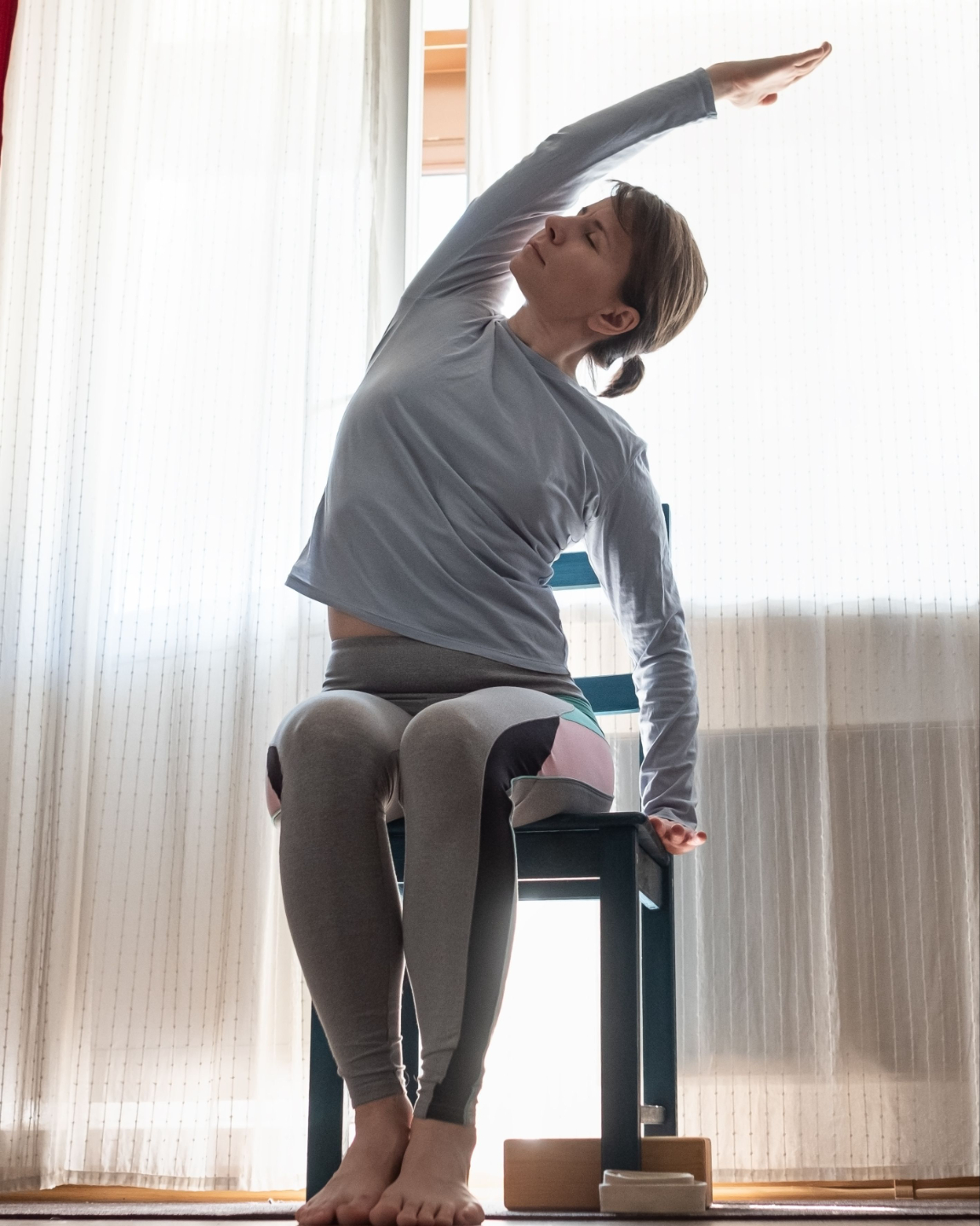
Mindful Movement & Chair Yoga
Accessible stretching and mobility for all bodies, suitable for any office environment. Reduces stress and physical tension held from desk work and screen time.

Breath-work / Mindfulness Meditation
Targeted breathing and mindfulness techniques that shift the nervous system state and foster greater self awareness. Practical tools your team can use independently between sessions.

Mindfulness Training or Coaching
One-to-one or small group sessions for individuals wanting to go deeper. Building personal practices that last beyond the workplace programme.
Your Facilitator...
Tara Muir
I've been practising yoga for over 30 years and teaching for the last eight - specialising in therapeutic yoga practices.
I'm originally from the UK and based in Athens, where I work with individuals, groups and companies to bring mindfulness and deep rest practices into everyday life.
It's something I've very much needed myself. I have a very creative mind that can get easily overwhelmed with ideas and so I've spent a lot of time researching the best ways to stay calm, present and focused. This lived experience, alongside my training, is what I bring into every session.
My qualifications include over 500hrs of yoga teacher training, plus yoga nidra facilitation, somatic and mindfulness coaching. Every session I guide is grounded in both the science and the practice - accessible to complete beginners, effective from the very first session.